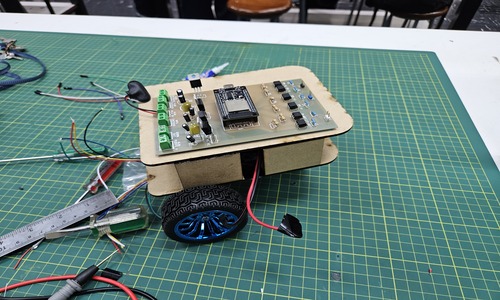
Design and implementation of an autonomous mobile robot with PID motion control
Course: Control Systems
Hardware Design and Implementation
PCB Design
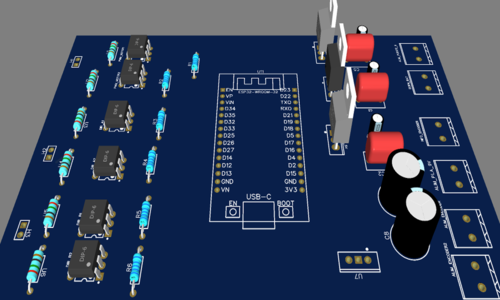
3D visualization of the custom PCB developed to integrate the ESP32 with the signal conditioning, motor control, and power circuitry required by the mobile robot.
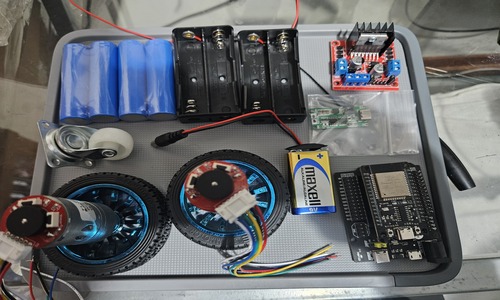
Electronic Components and Actuation System
Main hardware components used during development, including the ESP32, DC motors with encoders, motor driver, batteries, and other elements required for motion control and prototype integration.
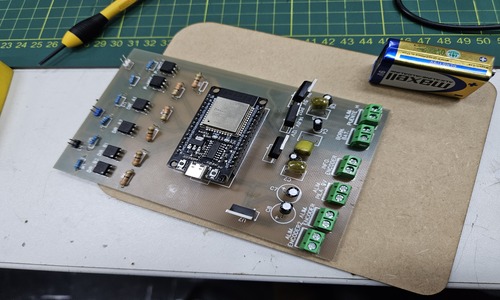
PCB Implementation
Fabricated and assembled control PCB integrating the ESP32 and the electronic stages used for motor actuation, encoder signal processing, and power distribution.
Experimental Testing
Control and Signal Validation
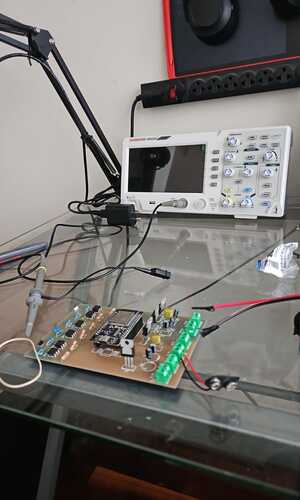
Experimental testing of the implemented electronics using laboratory instrumentation to verify the control signals and evaluate the behavior of the system prior to final integration.
Final Mobile Robot Prototype
Final integration of the electronic control system, PCB, motors, encoders, and mechanical structure into the autonomous mobile platform used for PID-controlled navigation tests.